Prepare work for AI agents
Measure a task, standardize it and check its exceptions before an AI agent is designed for it.
Role
An automation center of excellence (CoE) decides where to automate next and how to design it; Optimus Hive supplies recorded, costed evidence for both. Opus (task mining) maps each task's variants and case cost, and Agent Studio in Opus measures a chosen task before design starts.
This page covers finding and designing the next automation. Planning and governing the program sit with AI transformation leaders.
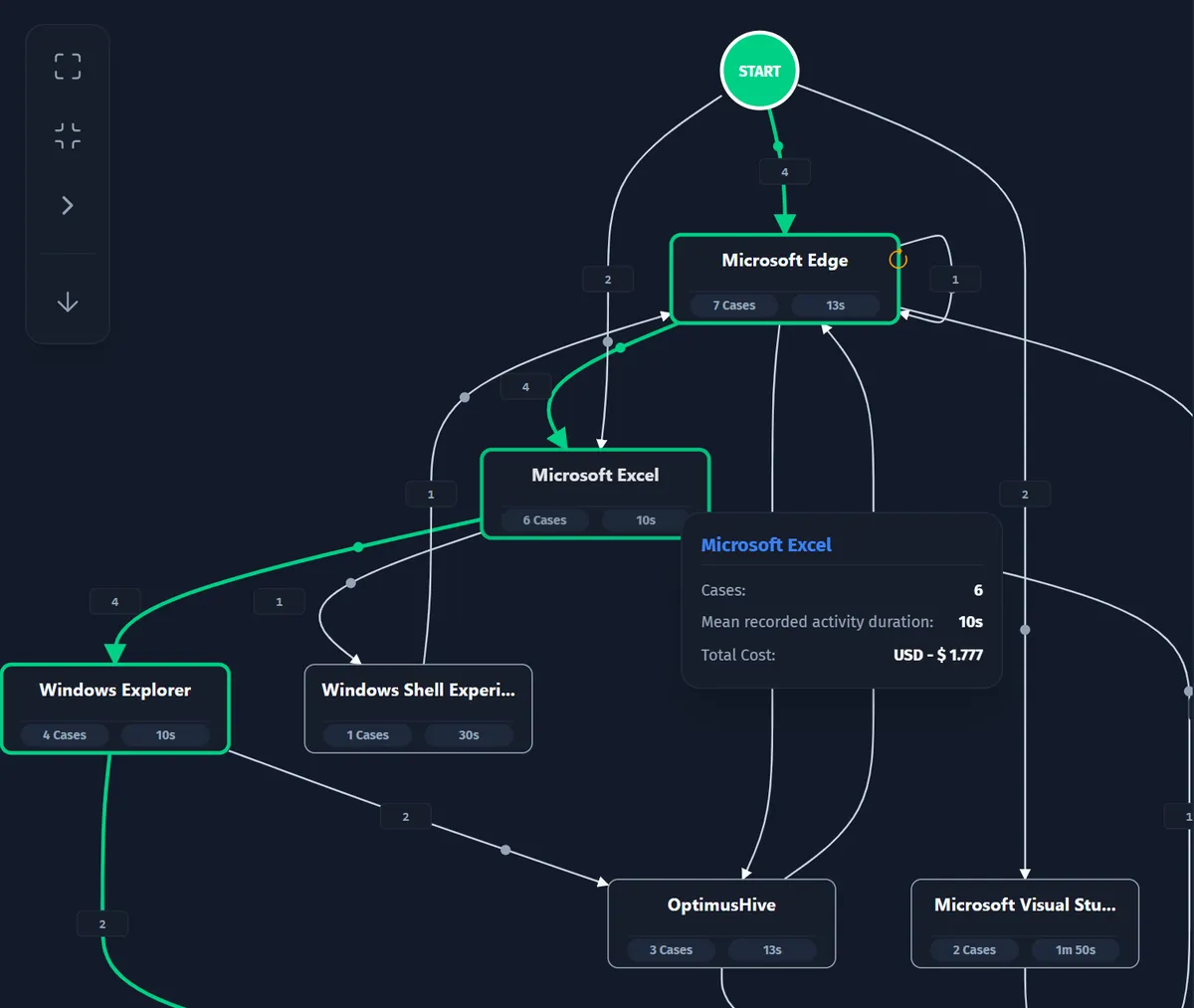
Opus costs every recorded case from its duration and the department's rate, and the task process map shows each variant with its average case cost. The variants and loops that add the most cost stand out.
Favus shows the current automation share of each activity, read from the resource names in your event log. It measures today's automation; it does not score what could be automated.
Analysts mark the best recorded run as the approved way of working, and review the exceptions employees log during the task. Desktop Copilot then shows the approved method to staff as an on-screen checklist.
Opus finds work patterns that repeat across people and days, over a window of up to 90 days, and reviewers accept or reject each one. Opus then ranks candidates by measured volume, stability and exceptions, against your cost assumptions.
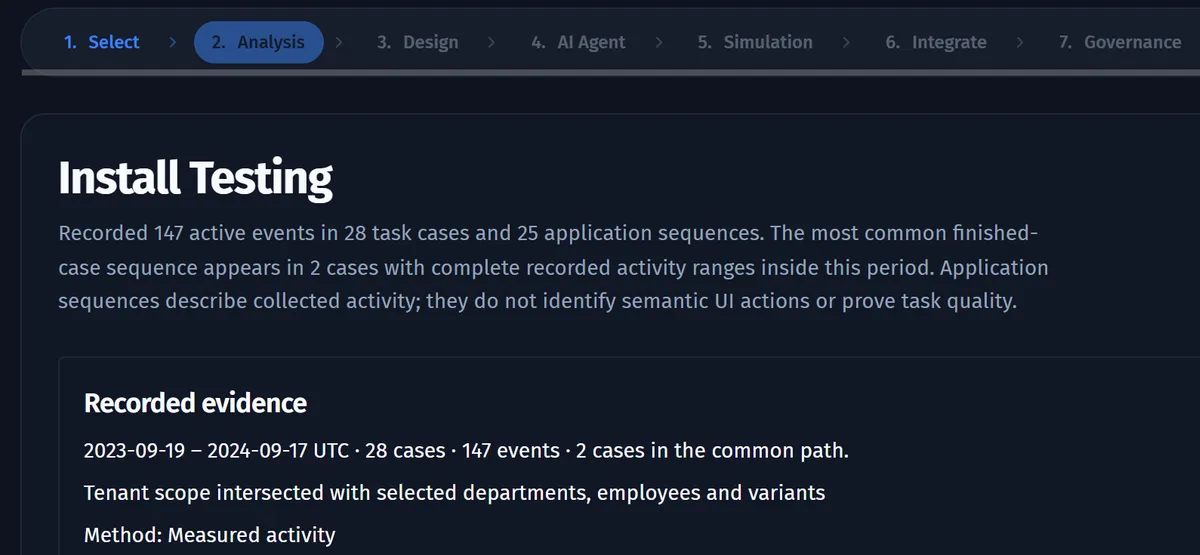
Agent Studio in Opus starts every design from measurement: the task's recorded cases, source events and most common application path.
The map shows each variant of the task, how often it occurs and what a case costs on average.
Before any AI draft, Agent Studio measures the chosen task, from its cases and source events to its most common application path and bottlenecks.
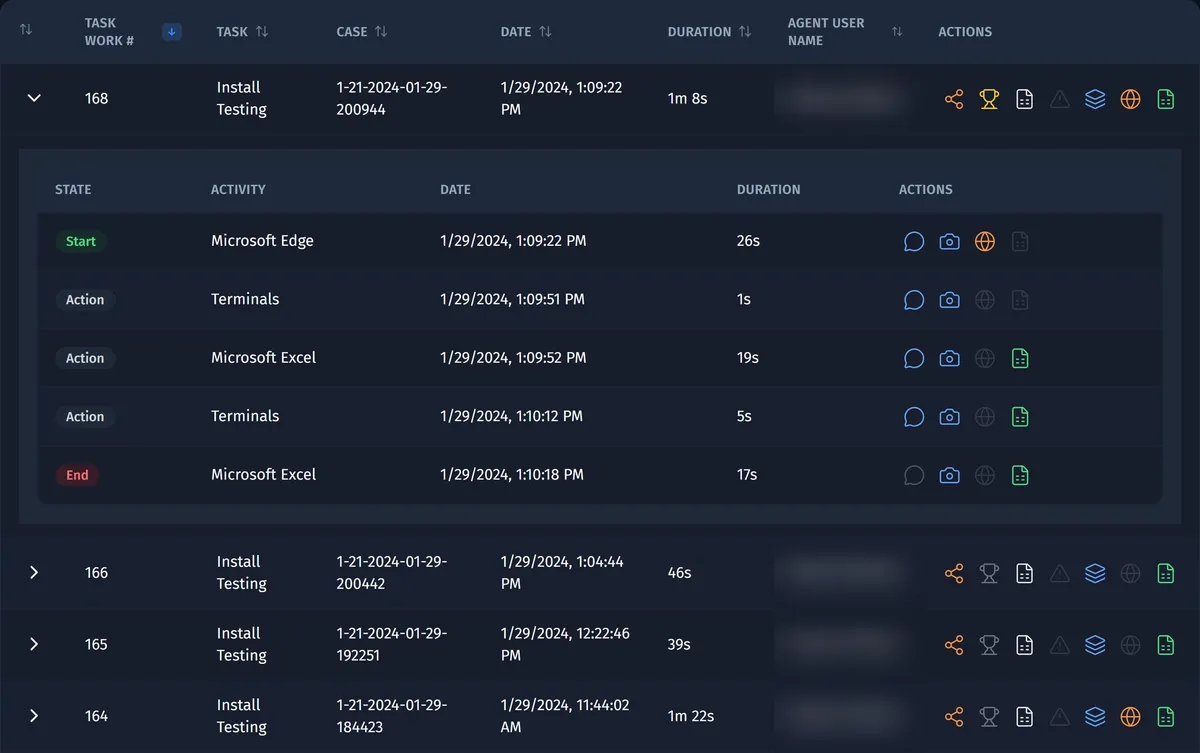
The best recorded run, marked as the approved way of working and reviewable step by step.
An approved recorded run can be exported, and Opus uses AI to draft a workflow from its recorded steps for your automation team to refine. Drafting needs AI set up for your organization's workspace, and it is not part of the free trial.
Once a task is measured, Agent Studio in Opus drafts the agent design. Every output is marked as a draft for your team to review.
Configuration, tools, validation rules, guardrails with a list of personal data to mask, a test scenario and a business case, each a review-required draft. Agent Studio writes these drafts with the AI provider set up for your workspace, and they are not part of the free trial.
A reviewer can hand an accepted repeated-work pattern to Agent Studio as the starting point for a design.
Three pages go deeper on the CoE's part of the work.
Measure a task, standardize it and check its exceptions before an AI agent is designed for it.
Build the candidate list from recorded, costed work rather than from opinion.
Capture the approved method of each task, so every design starts from how the work is really done.
Operations, IT, finance and transformation leaders each need a different answer.
Which of our work should AI agents take on first, and what is it worth?
Delivered by Opus, Favus and Via
Can we roll this out and control it on our estate?
Delivered by Opus
What does our manual work cost, and what will the move cost?
Delivered by Opus and Via
How do I build a plan for moving work to AI agents that I can defend and track?
Delivered by Opus and Via
Short answers on where Optimus Hive stops and your automation tools take over.
Optimus Hive helps your CoE find and design automations rather than run them. Agent Studio in Opus measures the task. From an approved recorded run, Opus uses AI to draft a workflow for your team to build on. That drafting runs on the AI provider set up in your organization's workspace and is not part of the free trial.
Request a demo to see how Opus measures, costs and standardizes one of your tasks before an agent is designed for it.