Task mining · Process mining · Transformation planning
Optimus Hive: the process intelligence platform for your agentic workforce
Optimus Hive is a product suite for planning the move of work to AI agents on evidence. Opus (task mining) and Favus (process mining) show how work is done today, and Via (transformation planning) plans, prices and tracks the move.

Opus records how work is done on Windows desktops (step 1). Favus maps how the end-to-end process flows, from your business systems' event logs (step 2). The two connect at each case through the unified case timeline, once the case-matching rule is set. Agent Studio in Opus then drafts AI-agent designs for your team to review; it needs an AI provider set up for your workspace, and its AI drafts are not part of the free trial. Your team brings the findings into Via (step 3), which plans, prices and tracks the move of work to AI agents. Prove the value: Via compares the actual savings your team enters with the forecast, while Measured Objectives track results from your process data separately. Only that case link between products is made in software; your team carries every other hand-off across.
Recognized by Everest Group
Optimus Hive was named a Major Contender and a Star Performer in Everest Group's Digital Interaction Intelligence Products PEAK Matrix® Assessment 2026.
Optimus Hive
- Major Contender
- Digital Interaction Intelligence Products
- Star Performer
- Year-over-year improvement
Everest Group, PEAK Matrix® Assessment 2026
Why evidence comes before AI agents
You can't hand work to AI agents until you know how it's done today, what it costs and what should change. Three gaps stand in the way.
Process documents show the plan, not the practice
Procedures and workshop notes describe how work should run. They don't show the workarounds, exceptions and extra steps that happen at the desk.
No cost baseline for each task
Without knowing what each task costs today, you can't tell which work is worth handing to an AI agent, or what the move would save.
No way to track savings against the plan
Without a measured baseline, there is nothing to track the savings against once AI agents take on part of the work.

Opus: see how tasks are really done
Opus is task mining software that records how people work on Windows desktops, so you know what each task involves and costs.
Desktop capture
Applications, websites, window titles and time, recorded under a privacy policy your administrators publish.
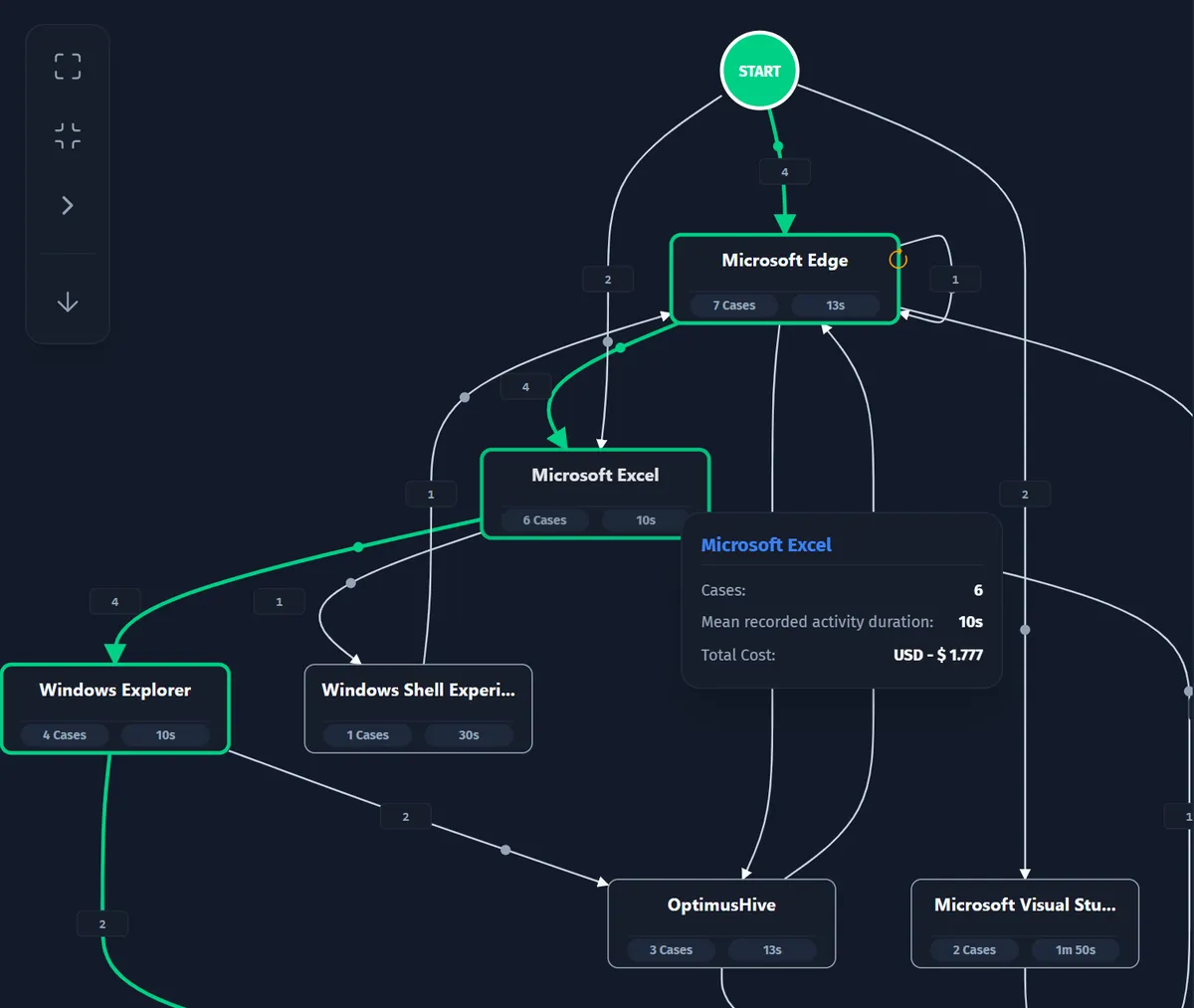
Task process map
Each recorded task drawn step by step, with its variants, loops and lead times.
Cost per task and variant
Every task case costed from its duration and the department's hourly or daily rate.
Explore Opus task mining software.
Favus: see how end-to-end processes run
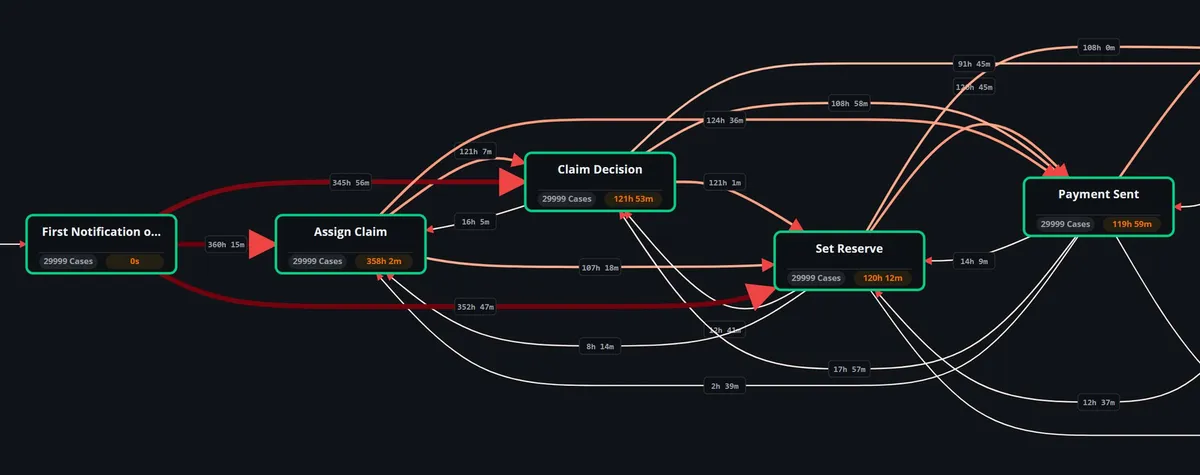
Favus is process mining software that turns event logs from your business systems into process maps, so you see how end-to-end processes really run.
Event log in
Upload an event log with a case ID, an activity and a timestamp for each event.
Process map and variants
See the paths cases take, the most common path, and the top variants by case count.
Cycle times
See the average time between each pair of steps, and where waiting time builds up.
Explore Favus process mining software.
One method, one platform
Optimus Hive follows one method: Opus captures how tasks are done, Favus maps how processes run, and Via plans the move to an agentic workforce. Only one link between the products is made in software; your team carries every other hand-off across.
See how the work is done
Opus records the applications, websites and time behind each task on Windows desktops, then maps each task's steps, variants and cost.
See how the process runs
Favus turns event logs from your business systems into a process map, with the paths cases take and the time between steps.
Connect each case
Opus and Favus link at the case level. Once an administrator sets the case-matching rule and employees enter the case ID, the unified case timeline shows desktop work inside each business case.
Design the agent
From a task recorded in Opus, Agent Studio drafts an AI-agent design: configuration, tools, guardrails and a test scenario, for your team to review. Agent Studio needs an AI provider set up for your workspace, and its AI drafts are not part of the free trial.
Plan, price and track the move to AI agents
Your team brings the findings into Via. Via models each task's current and future performer, human or AI agent, and calculates hours, cost and the business case.
Prove the value
Via compares forecast with realized savings, using the actuals your team enters. Separately, Measured Objectives track case duration, cost and automation rate from your process data.
Go deeper into how Opus, Favus and Via fit together, step by step.
What you can do with Optimus Hive
Optimus Hive lets you see how work is done, put a cost on it and plan its move to AI agents, on one platform. Your administrators control what is recorded about people.
Each capability has its own page on the Optimus Hive platform.
See how work really happens
Opus records desktop activity and Favus reads business-system event logs, so you start from recorded evidence rather than workshop notes.
Follow one case from screen to system
The unified case timeline places the desktop work for a case between its events in the system of record.
Put a cost and a time on today's work
Opus costs each task case from its duration and the department's rate. Favus shows the average time between process steps.
Find the work worth moving
Opus finds work patterns that repeat across people and days, and Favus shows which steps and segments are slowest. Your team decides what moves.
Plan the human-and-AI workforce
Via models each task's human or AI-agent performer and builds the business case.
Measure work while protecting people
Opus records applications, websites and time, and collects no work activity until an administrator publishes a privacy policy.
Who it's for
Optimus Hive is for leaders who decide which work moves to AI agents, and for people who must trust how that work is measured.
Find your use case, industry or role in solutions by goal, industry and role.
Via
COO or head of operations
Which of our work should AI agents take on first, and what is it worth? Opus puts a cost on today's tasks and ranks automation candidates; Via prices the move.
Via
Transformation or automation lead
How do I build a plan for moving work to AI agents that I can defend and track? Via models each task's current and future performer and tracks savings against the plan.
Opus
CIO or IT leader
Can we roll this out and control it on our estate? Opus installs with an MSI package, one-time device enrollment and signed updates. The Opus web app supports OpenID Connect SSO and SCIM.
Opus
HR, works council or data protection lead
What exactly does Opus record about employees, and who controls it? Opus records applications, websites and time. Most other data types are switched on or off per department; the rest follow your privacy policy. Employees can see which data categories are collected about them, and who accessed their data.
See the product
Optimus Hive screens are shown here with demo data, never customer data.
Questions leaders ask first
Short answers to three questions leaders ask before choosing a process intelligence platform.
Request a demo, or start a free Opus trial
Tell us which work you want to move to AI agents, and we'll show how Optimus Hive measures it and plans the move.